


By ROKA Studio
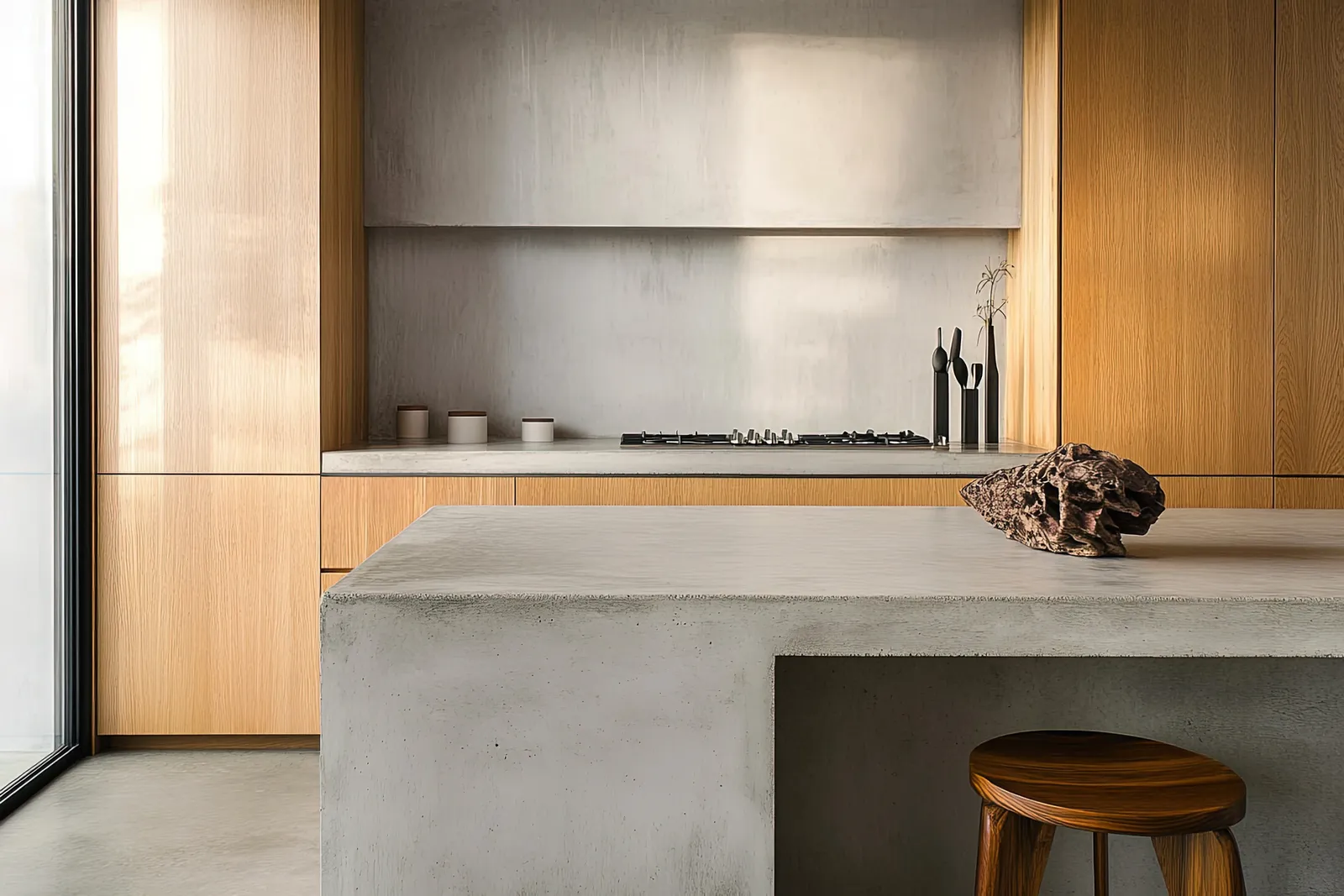
A pan of boiling pasta comes off the hob and goes straight down on the worktop. That's fine. A ROKA top is sealed to take it, and the seal is rated to 149°C, about 50°C hotter than boiling water.
I cooked for a living for ten years before I cast concrete, so the hot pan was the first thing I thought about when I designed our tops. Here's how it works, so you know where the line sits in your own kitchen.
What does 149°C actually cover?
Most of what comes off a hob. Boiling water is 100°C. A pot of soup, a kettle, a teapot and a saucepan of pasta all sit well under the rating. They go straight onto the top with no mat and no thinking.
That's the part most people want to know, and it's why a concrete top suits a cook, because you put the pan down where you're standing and carry on.
What about a frying pan straight off a high flame?
A dry frying pan on a high flame runs hotter than the seal's rating, and so does a tray straight out of a hot oven. Those go on a board or a trivet, exactly as they would on granite or any other stone. It's the same habit, and most keen cooks already have it.
A cast iron pan is the usual example, since it holds its heat for a long time and a wooden board beside the hob earns its place. Keep one there and the question never comes up.
Why is it the sealer that's rated?
Concrete itself handles heat well. It's slow to let heat through, which is why it's used to shield walls behind fires. So the number you're given for a worktop is the sealer's, because the sealer is what protects the surface.
We use SureCrete XS-327, a two-part, water-based hybrid polyurethane. Its maker rates it to 149°C. We put on a prime coat and two coats of seal, with extra coats round sinks and other wet areas, so the surface is covered edge to edge.
What else does that seal do?
The same coat that handles heat does the other jobs. Water beads on it. It's stain resistant to most household chemicals and food. It's UV stable, so a sunny window is no worry.
Timing matters at the start. The top takes light use 24 hours after the final coat, and it's fully cured and food safe after seven days. After that, it's a working surface.
If a patch ever wears, it can be lightly sanded and recoated in place. You don't replace a worktop for that.
How do you look after it day to day?
Cut on a board, because a knife marks any worktop. Keep a trivet or a board beside the hob for the frying pan and the oven tray. That's most of the routine.
The rest is on our concrete worktop care page, including how to look after the seal.
Does concrete feel different to cook on?
Yes, and in a good way. It's cool under your hands when you're rolling pastry, and it's solid when you set a heavy pan down.
That solidity comes from the build. Most of our worktops are cast at full finished thickness, 30 to 50mm in the shop. Glass fibre runs through almost every piece. We'd rather build in more strength than a job needs.
Can you try it before you buy?
Yes. Put red wine, lemon and olive oil on a sample overnight and see what happens. Stand a hot mug on it. Pick it up in your own kitchen light.
Samples are free. Order your free samples and see the colour and the seal for yourself.
That's the test of a worktop in a cook's kitchen. Lift the pot, put it down, carry on.
See the colours and finishes for yourself.
Order free samples