'/%3e%3cpolygon%20points='228.5%20230%20228.5%20811.9%200%20811.9%200%20458.4%20228.5%20230'%20fill='rgb(53,%2053,%2049)'/%3e%3cpath%20d='M814.6,227.1C813.9,101.5,711.9,0,586.2,0H0v228.5h586.2v356.3l228.5-228.5v-129.2h0Z'%20fill='rgb(53,%2053,%2049)'/%3e%3cpath%20d='M308.4,1111.8c-25.2,4.5-51.7-.6-71.5-16.8-13.6-11.2-22.6-26.9-25.7-44.3-1.7-9.5-1.7-19-.3-28.6,4.8-31.7,28.7-55.4,59.8-62.2,13.2-2.9,26.6-2.9,39.8-.2,31.2,6.5,55.4,30.2,60.5,61.8,1.5,9.6,1.5,19.1,0,28.6-5.4,32.2-30.4,55.8-62.6,61.6ZM302.2,1085.3c18-3.6,30.7-16.8,35-34.3,2.4-10.1,2.4-20.5,0-30.6-1.8-8-5.5-15.1-11-21.1-11.4-12.7-29.2-16.9-45.8-13.6-18.1,3.6-31.3,16.8-35.5,34.8-2.3,10-2.3,20.3,0,30.3,2,8.7,6.2,16.5,12.5,22.8,11.6,11.5,28.7,14.9,44.7,11.8Z'%20fill='rgb(53,%2053,%2049)'/%3e%3cpath%20d='M89,1047.2l39.9,62.9h-36.5c0,0-36.4-61.5-36.4-61.5h-23.5s0,61.5,0,61.5H1.1s0-149.2,0-149.2h74.9c5.9,0,11.4.9,16.9,2.4,18,5.3,31,19.3,32.1,38.3.4,6.6-.3,12.8-2.5,19-5.7,14.9-18.3,23.2-33.5,26.6ZM91.8,1000.8c-1.2-6.2-5.6-10.8-11.5-12.8-3.2-1-6.3-1.4-9.7-1.5h-38.1s0,38.6,0,38.6h39.7c3.6-.3,6.8-.8,9.9-2.2,8.8-3.9,11.4-12.9,9.6-22.1Z'%20fill='rgb(53,%2053,%2049)'/%3e%3cpath%20d='M771,1075.3h-65.1s-12.7,34.9-12.7,34.9h-33s59.2-149.2,59.2-149.2h39.6s59.8,149.2,59.8,149.2h-35s-12.6-34.9-12.6-34.9ZM762.5,1050.9l-24.4-63.8-23.7,63.8h48Z'%20fill='rgb(53,%2053,%2049)'/%3e%3cpolygon%20points='528.8%201032.8%20594.1%201110.2%20553.5%201110.2%20496.4%201041.2%20496.4%201110.2%20464.7%201110.2%20464.7%20961%20496.4%20961%20496.5%201028.6%20549.4%20960.9%20586.5%20961%20528.8%201032.8'%20fill='rgb(53,%2053,%2049)'/%3e%3c/svg%3e)


By ROKA Studio
Ours is sealed with SureCrete XS-327, and the answer to how often is a check once a year. If water stops beading on the surface, it's due a recoat.
That's the short version. The rest is what the seal is, how to test it and what a recoat involves.
Why does a concrete worktop need a sealer at all?
Bare concrete is porous. The cement paste takes in liquid the way a dry sponge does, so oil, wine and coffee can sink in and stay. A sealer is what stops that. Without one, a kitchen worktop would stain.
It also decides how the top copes with the rest of kitchen life, from water round the sink to a hot pan to the cleaner you reach for without thinking. So the sealer matters as much as the concrete underneath it.
Which sealer do we use?
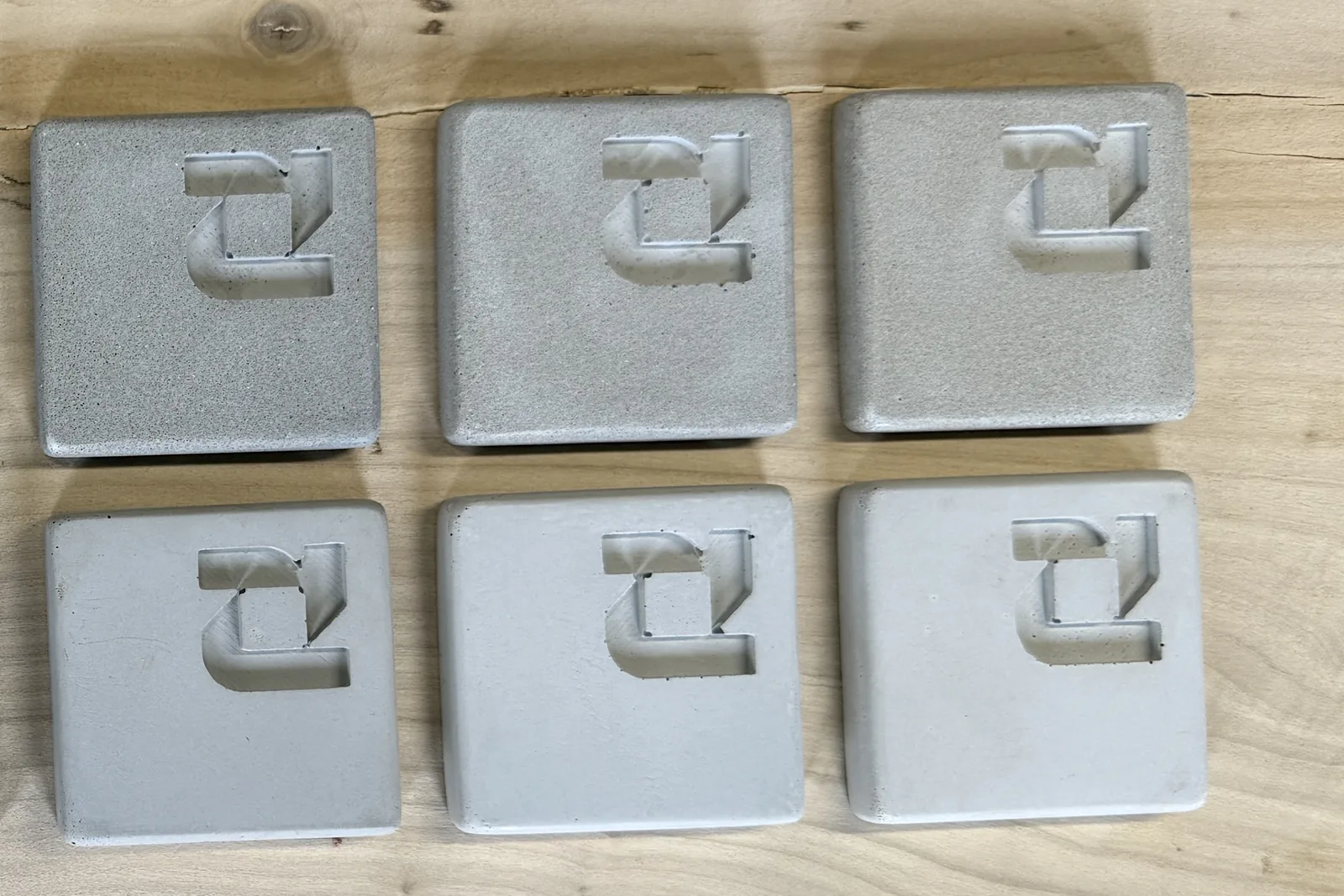
SureCrete XS-327. It's a two-part, water-based hybrid polyurethane. We put on a prime coat and then two coats of seal, and round sinks and other wet areas we add extra coats. Worktops and sample tablets are sealed the same way, so the sample you hold is a fair test of the top you'd get.
The maker rates it stain resistant to most household chemicals and food. It's UV stable, and it's rated to 149°C. Water beads on it. It takes light use 24 hours after the final coat and it's fully cured after seven days.
What should you look for in any sealer?
Ask three things of any sealer, ours or someone else's. What does the maker say it resists, and in what words? What heat is it rated to? And when a patch wears, can it be repaired where it is, or does the whole top have to come out and be redone?
The third question gets asked least and matters most. A top you can touch up in place is a top you'll look after. A top that needs stripping back is one you'll put off.
How do you check the seal?
Use water. Put a few drops on the worktop in daylight, and start beside the sink and the taps, where it sees the most wet. If the drops sit up and bead, the seal's doing its job. If they flatten out and soak in, it's wearing.
Do it once a year. Do it sooner if a patch looks dull or you've been rough on it with a pad or a strong cleaner.
What does a recoat involve?
A worn patch can be lightly sanded and recoated in place, so the top stays where it is and the repair is to the seal rather than the concrete.
How the guarantee treats the seal, in year one and after, is spelled out on our guarantee page.
What wears a seal faster?
Three things, and they're all things the guarantee leaves out too. Knife cuts. Abrasive pads and harsh chemicals. Heat over 149°C.
That last one catches people. A pan straight off the hob can run hotter than 149°C, so use a trivet. Cut on a board. Wipe with something mild.
A seal buys you time to wipe up. It doesn't make the top into glass, and nothing we know of makes concrete a surface you can ignore.
Why try it on a sample first?
You can run the test yourself before you spend anything, because our free samples are sealed exactly as a worktop is. Put a drop of water on one and watch it bead. Try a drop of wine or lemon, leave it, wipe it off, and look at the tablet again in daylight.
You can ask for up to five tablets a request, and you'll see how the seal behaves on the real thing. Our free samples come in both finishes, and the full routine for looking after a top is on our worktop care page.
See the colours and finishes for yourself.
Order free samples