


By ROKA Studio
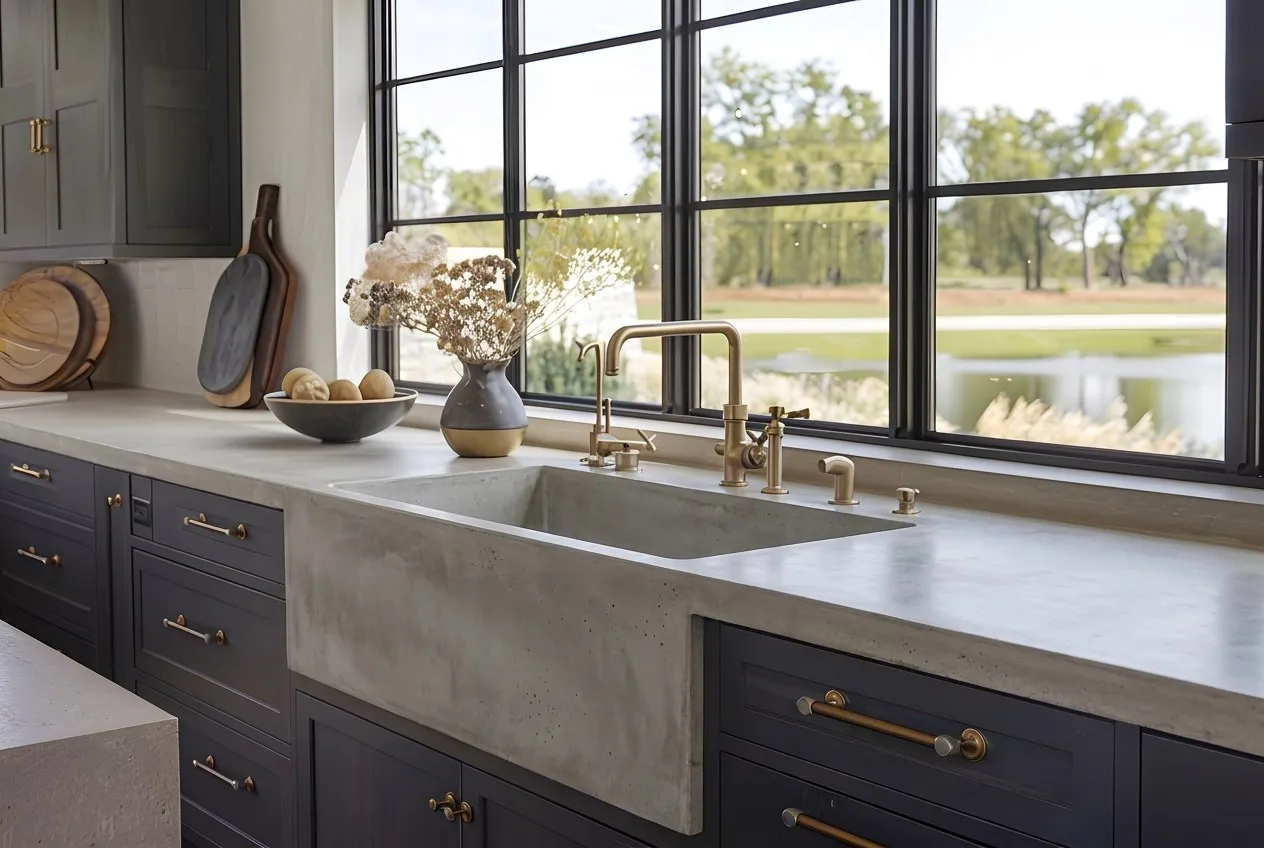
I cooked for a living for ten years, and the sink was where my day went. Pans in, pans out, a wet board on the side, a tap running most of the time. So here's the short answer. A stainless sink is the cheaper, lighter box you drop in. A concrete sink can be cast into the worktop in the same piece, in the same colour, with no rim and no seam. If you want the kitchen to read as one surface, concrete wins. If the lowest price comes first, stainless does.
What do you actually get with a concrete sink?
The bowl is formed into the top, so the worktop runs into it without a rim, a lip or a silicone line. There's no edge for crumbs and water to sit in, and nothing to clean round. The bowl is 500 x 400mm and 200mm deep. Drainer grooves can be cast in beside it, so washed glasses drip back into the bowl and not onto the counter.
It takes a standard 90mm basket waste, which isn't included, and it has no overflow. Your plumber will know the fitting. The sink is made to order and goes into a made-to-size worktop, so its position is settled on the drawing before anything is cast. We template your kitchen first, so the bowl lands over the right cabinet.
Is concrete as tough as stainless steel?
They're tough in different ways. Stainless is thin metal, so it takes a knock and rings when it does. It also picks up fine scratches from pans and scourers as it's used.
A concrete sink is solid cast concrete. Alkali-resistant glass fibre runs through almost every piece we make, and we'd rather build in more strength than a job needs. It's dense and heavy, so a running tap doesn't drum on it the way it can on thin metal. You'll notice that in an open-plan room, where the sink is never far from the sofa.
Will it stain, and what about heat?
We seal every piece with SureCrete XS-327. Its maker rates it stain resistant to most household chemicals and food, and water beads on the surface, so a splash wipes straight off. The seal goes on as a prime coat and two further coats, with extra coats round the sink where the water is.
The seal is rated to 149°C, about 50°C hotter than boiling water. A pan of pasta water tipped into the bowl is fine. Check the seal once a year. If water stops beading, it's due a recoat, and a worn patch can be lightly sanded and recoated in place.
What does each one cost?
Stainless wins on price at the till. It's a mass-made product and you can buy one in an afternoon. We won't pretend otherwise.
A concrete sink starts from £450 on a quoted worktop, with no separate sink to buy. That buys a bowl in one of nineteen named colours, matched to your top, plus drainer grooves if you want them. The worktop is £850 per m² up to 30mm, and every named colour costs the same. Templating, delivery and fitting are quoted on top, with the drawing.
Which one suits you?
Choose stainless if the sink is a tool and price comes first. Choose concrete if you're planning a concrete worktop anyway and want the sink to belong to it, or if you want one colour running from the counter into the bowl. After ten years at a sink, I know which I'd want to look at.
Our concrete sinks and basins page shows what we can make. Hold the colour first. Order free samples and put one beside your tap, in your own light.
See the colours and finishes for yourself.
Order free samples