'/%3e%3cpolygon%20points='228.5%20230%20228.5%20811.9%200%20811.9%200%20458.4%20228.5%20230'%20fill='rgb(53,%2053,%2049)'/%3e%3cpath%20d='M814.6,227.1C813.9,101.5,711.9,0,586.2,0H0v228.5h586.2v356.3l228.5-228.5v-129.2h0Z'%20fill='rgb(53,%2053,%2049)'/%3e%3cpath%20d='M308.4,1111.8c-25.2,4.5-51.7-.6-71.5-16.8-13.6-11.2-22.6-26.9-25.7-44.3-1.7-9.5-1.7-19-.3-28.6,4.8-31.7,28.7-55.4,59.8-62.2,13.2-2.9,26.6-2.9,39.8-.2,31.2,6.5,55.4,30.2,60.5,61.8,1.5,9.6,1.5,19.1,0,28.6-5.4,32.2-30.4,55.8-62.6,61.6ZM302.2,1085.3c18-3.6,30.7-16.8,35-34.3,2.4-10.1,2.4-20.5,0-30.6-1.8-8-5.5-15.1-11-21.1-11.4-12.7-29.2-16.9-45.8-13.6-18.1,3.6-31.3,16.8-35.5,34.8-2.3,10-2.3,20.3,0,30.3,2,8.7,6.2,16.5,12.5,22.8,11.6,11.5,28.7,14.9,44.7,11.8Z'%20fill='rgb(53,%2053,%2049)'/%3e%3cpath%20d='M89,1047.2l39.9,62.9h-36.5c0,0-36.4-61.5-36.4-61.5h-23.5s0,61.5,0,61.5H1.1s0-149.2,0-149.2h74.9c5.9,0,11.4.9,16.9,2.4,18,5.3,31,19.3,32.1,38.3.4,6.6-.3,12.8-2.5,19-5.7,14.9-18.3,23.2-33.5,26.6ZM91.8,1000.8c-1.2-6.2-5.6-10.8-11.5-12.8-3.2-1-6.3-1.4-9.7-1.5h-38.1s0,38.6,0,38.6h39.7c3.6-.3,6.8-.8,9.9-2.2,8.8-3.9,11.4-12.9,9.6-22.1Z'%20fill='rgb(53,%2053,%2049)'/%3e%3cpath%20d='M771,1075.3h-65.1s-12.7,34.9-12.7,34.9h-33s59.2-149.2,59.2-149.2h39.6s59.8,149.2,59.8,149.2h-35s-12.6-34.9-12.6-34.9ZM762.5,1050.9l-24.4-63.8-23.7,63.8h48Z'%20fill='rgb(53,%2053,%2049)'/%3e%3cpolygon%20points='528.8%201032.8%20594.1%201110.2%20553.5%201110.2%20496.4%201041.2%20496.4%201110.2%20464.7%201110.2%20464.7%20961%20496.4%20961%20496.5%201028.6%20549.4%20960.9%20586.5%20961%20528.8%201032.8'%20fill='rgb(53,%2053,%2049)'/%3e%3c/svg%3e)


By ROKA Studio
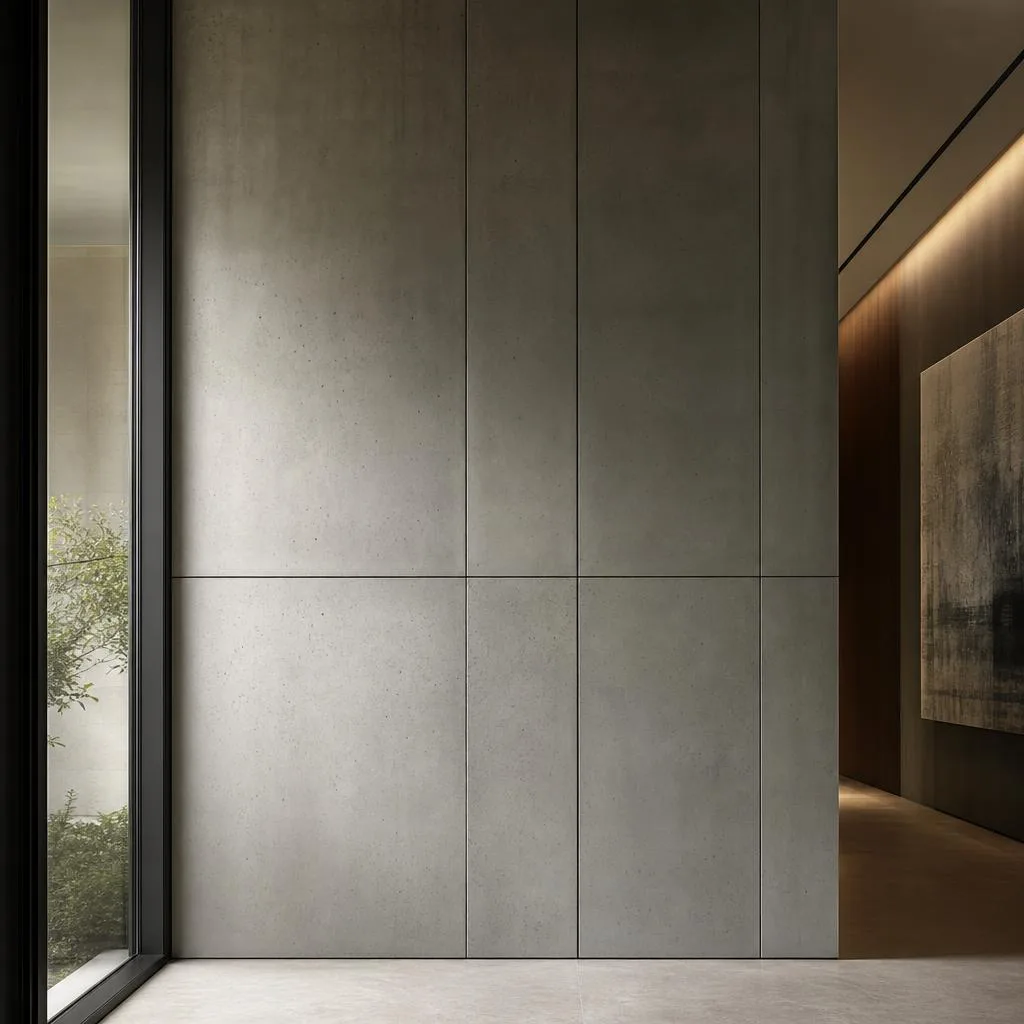
A wet, near-freezing winter is the real test for anything fixed outside, and it's the first question anyone asks before putting cladding on an exterior wall. Here's what actually happens to concrete in a freeze, and why ours is built for it.
What actually damages concrete in a freeze?
Not the cold itself. Water. Ordinary concrete is porous enough that rain works into it; when that water freezes it expands by around 9%, and if the concrete can't absorb that inside its own pore structure, the expansion cracks it from the inside. Years of that produces the scaling and surface flaking that gives concrete its bad name outdoors.
So why doesn't that happen to ROKA cladding?
Two things together: a low-porosity mix limits how much water gets in to freeze in the first place, and the glass-fibre reinforcement in every ROKA piece (the same GFRC as the worktops) holds the material together even where a little water does get in. Built to this standard, GRC has a genuine track record here: over 30 years of outdoor use across northern Europe with no reported scaling from freeze-thaw.
Does that mean freeze-thaw damage never happens to concrete?
Not never. Where it does, it traces back to specific causes: poor curing, standing water pooling at the base of a piece, or de-icing salt. None of those apply to a tile fixed vertically above ground, which is exactly how ours goes up.
Is that just taking the industry's word for it?
No. We're checking it ourselves too. Test panels go outside once round 2's mould is confirmed, split across a sunny spot and a shaded one, including a spot that catches rain runoff, photographed and logged monthly through a full winter and summer: any efflorescence, any colour change, any damage after a hard freeze. Outdoor use is already confirmed; the panels will keep checking it, not gating it.
See the colours and finishes for yourself.
Order free samples